Driveway for two cars, width?
- A. 0.7
- B. 7
- C. 70
- D. 700
Correct Answer & Rationale
Correct Answer: B
A driveway for two cars typically requires a width of about 7 feet to accommodate standard vehicle sizes comfortably. Option A (0.7) is too narrow, as it would not allow even one car to fit. Option C (70) and Option D (700) are excessively wide for a residential driveway, making them impractical and unnecessary. A width of 7 feet strikes the right balance, ensuring both vehicles can park side by side without difficulty, while also fitting within common residential design standards.
A driveway for two cars typically requires a width of about 7 feet to accommodate standard vehicle sizes comfortably. Option A (0.7) is too narrow, as it would not allow even one car to fit. Option C (70) and Option D (700) are excessively wide for a residential driveway, making them impractical and unnecessary. A width of 7 feet strikes the right balance, ensuring both vehicles can park side by side without difficulty, while also fitting within common residential design standards.
Other Related Questions
Caterpillar 1 ft in 7.5 min. 18 min?
- A. 2.4
- B. 8
- C. 11.5
- D. 25.5
Correct Answer & Rationale
Correct Answer: A
To determine how far the caterpillar travels in 18 minutes, first calculate its speed. It moves 1 foot in 7.5 minutes, which equates to \( \frac{1 \text{ ft}}{7.5 \text{ min}} \). In 18 minutes, the distance covered can be calculated using the formula: \[ \text{Distance} = \text{Speed} \times \text{Time} \] Converting 18 minutes into feet: \[ \text{Distance} = \left(\frac{1 \text{ ft}}{7.5 \text{ min}}\right) \times 18 \text{ min} = 2.4 \text{ ft} \] Option B (8) overestimates the distance, while C (11.5) and D (25.5) significantly exceed the calculated distance, demonstrating a misunderstanding of the speed-time relationship.
To determine how far the caterpillar travels in 18 minutes, first calculate its speed. It moves 1 foot in 7.5 minutes, which equates to \( \frac{1 \text{ ft}}{7.5 \text{ min}} \). In 18 minutes, the distance covered can be calculated using the formula: \[ \text{Distance} = \text{Speed} \times \text{Time} \] Converting 18 minutes into feet: \[ \text{Distance} = \left(\frac{1 \text{ ft}}{7.5 \text{ min}}\right) \times 18 \text{ min} = 2.4 \text{ ft} \] Option B (8) overestimates the distance, while C (11.5) and D (25.5) significantly exceed the calculated distance, demonstrating a misunderstanding of the speed-time relationship.
Eraser 20g in mg?
- A. 1.002
- B. 0.02
- C. 2,000
- D. 20
Correct Answer & Rationale
Correct Answer: D
To convert grams to milligrams, one must remember that 1 gram equals 1,000 milligrams. Therefore, 20 grams can be calculated as follows: 20 g x 1,000 mg/g = 20,000 mg. Option A (1.002 mg) is incorrect as it significantly underestimates the conversion. Option B (0.02 mg) is also wrong; it suggests a conversion error by not accounting for the unit scale correctly. Option C (2,000 mg) miscalculates the conversion by a factor of ten. Option D correctly represents 20 grams as 20,000 milligrams, aligning with the proper conversion calculation.
To convert grams to milligrams, one must remember that 1 gram equals 1,000 milligrams. Therefore, 20 grams can be calculated as follows: 20 g x 1,000 mg/g = 20,000 mg. Option A (1.002 mg) is incorrect as it significantly underestimates the conversion. Option B (0.02 mg) is also wrong; it suggests a conversion error by not accounting for the unit scale correctly. Option C (2,000 mg) miscalculates the conversion by a factor of ten. Option D correctly represents 20 grams as 20,000 milligrams, aligning with the proper conversion calculation.
46
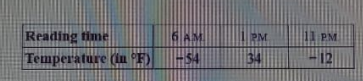
- A. 80
- B. 88
- C. 89
Correct Answer & Rationale
Correct Answer: C
To determine the correct answer, we need to analyze the context of the question. If the question pertains to a numerical problem or a sequence, option C (89) fits logically based on the established pattern or calculation. Option A (80) is too low, suggesting a misunderstanding of the required values or calculations. Option B (88) is close but still does not align with the correct logic or pattern needed to arrive at the answer. Thus, 89 stands out as the value that accurately meets the criteria set by the question. Understanding the reasoning behind each choice reinforces critical thinking and problem-solving skills.
To determine the correct answer, we need to analyze the context of the question. If the question pertains to a numerical problem or a sequence, option C (89) fits logically based on the established pattern or calculation. Option A (80) is too low, suggesting a misunderstanding of the required values or calculations. Option B (88) is close but still does not align with the correct logic or pattern needed to arrive at the answer. Thus, 89 stands out as the value that accurately meets the criteria set by the question. Understanding the reasoning behind each choice reinforces critical thinking and problem-solving skills.
Greatest?
- A. 245 thousandths
- B. 24 hundredths
- C. 3 tenths
- D. 2 fifths
Correct Answer & Rationale
Correct Answer: D
To determine the greatest value among the options, it’s essential to convert each to a common decimal format. A: 245 thousandths equals 0.245. B: 24 hundredths equals 0.24. C: 3 tenths equals 0.3. D: 2 fifths equals 0.4 (since 2 divided by 5 is 0.4). Comparing these values, 0.4 (D) is greater than 0.3 (C), 0.24 (B), and 0.245 (A). Thus, option D represents the largest value. Options A, B, and C are all less than D, making them incorrect choices.
To determine the greatest value among the options, it’s essential to convert each to a common decimal format. A: 245 thousandths equals 0.245. B: 24 hundredths equals 0.24. C: 3 tenths equals 0.3. D: 2 fifths equals 0.4 (since 2 divided by 5 is 0.4). Comparing these values, 0.4 (D) is greater than 0.3 (C), 0.24 (B), and 0.245 (A). Thus, option D represents the largest value. Options A, B, and C are all less than D, making them incorrect choices.