For all positive integers n, let n be defined as the sum of the positive divisors of n. For example, bullet 9 = 1 + 3 + 9 = 13. Which of the following is equal to 16 - 15?
- A. 41
- B. 3
- C. 4
- D. 5
Correct Answer & Rationale
Correct Answer: C
To solve the expression 16 - 15, we first perform the subtraction, which yields 1. Now, examining the options: A: 41 is incorrect as it does not equal 1. B: 3 is also incorrect, as it is greater than 1. C: 4 is the only option that meets the criteria, but it is not equal to 1, making it incorrect as well. D: 5 is incorrect for the same reason; it does not equal 1. None of the options accurately represent the result of 16 - 15, which is 1. The question seems to have an error in its provided options, as none align with the correct calculation.
To solve the expression 16 - 15, we first perform the subtraction, which yields 1. Now, examining the options: A: 41 is incorrect as it does not equal 1. B: 3 is also incorrect, as it is greater than 1. C: 4 is the only option that meets the criteria, but it is not equal to 1, making it incorrect as well. D: 5 is incorrect for the same reason; it does not equal 1. None of the options accurately represent the result of 16 - 15, which is 1. The question seems to have an error in its provided options, as none align with the correct calculation.
Other Related Questions
3√2- 2/(√2) =
- A. 2√2
- B. √2
- C. 3
- D. 4
Correct Answer & Rationale
Correct Answer: A
To solve the expression \( 3\sqrt{2} - \frac{2}{\sqrt{2}} \), we first simplify \( \frac{2}{\sqrt{2}} \). This can be rewritten as \( \frac{2\sqrt{2}}{2} = \sqrt{2} \). Thus, the expression becomes \( 3\sqrt{2} - \sqrt{2} \), which simplifies to \( 2\sqrt{2} \). Option B (\( \sqrt{2} \)) is incorrect as it does not account for the subtraction from \( 3\sqrt{2} \). Option C (3) is incorrect because it misrepresents the value obtained after simplification. Option D (4) is also incorrect, as it does not relate to the expression at all.
To solve the expression \( 3\sqrt{2} - \frac{2}{\sqrt{2}} \), we first simplify \( \frac{2}{\sqrt{2}} \). This can be rewritten as \( \frac{2\sqrt{2}}{2} = \sqrt{2} \). Thus, the expression becomes \( 3\sqrt{2} - \sqrt{2} \), which simplifies to \( 2\sqrt{2} \). Option B (\( \sqrt{2} \)) is incorrect as it does not account for the subtraction from \( 3\sqrt{2} \). Option C (3) is incorrect because it misrepresents the value obtained after simplification. Option D (4) is also incorrect, as it does not relate to the expression at all.
Square S has area 2√2 square units. What is the length of a side of square S?
- A. ∜128
- B. ∜32
- C. ∜8
- D. ∜2
Correct Answer & Rationale
Correct Answer: C
To find the length of a side of square S, we use the formula for the area of a square, which is \( \text{Area} = \text{side}^2 \). Given that the area is \( 2\sqrt{2} \), we set up the equation \( \text{side}^2 = 2\sqrt{2} \). Taking the square root gives us \( \text{side} = \sqrt{2\sqrt{2}} = \sqrt{2} \cdot \sqrt[4]{2} = \sqrt{2^2} = \sqrt{8} = 2\sqrt{2} \), which simplifies to \( \sqrt{8} \), leading to option C as the correct answer. Options A (\(\sqrt{128}\)), B (\(\sqrt{32}\)), and D (\(\sqrt{2}\)) are incorrect as they yield values greater than or less than the required side length. Specifically, \(\sqrt{128} = 8\sqrt{2}\) and \(\sqrt{32} = 4\sqrt{2}\) are both larger than \(2\sqrt{2}\), while \(\sqrt{2}\) is significantly smaller. Thus, option C accurately represents the side length of square S.
To find the length of a side of square S, we use the formula for the area of a square, which is \( \text{Area} = \text{side}^2 \). Given that the area is \( 2\sqrt{2} \), we set up the equation \( \text{side}^2 = 2\sqrt{2} \). Taking the square root gives us \( \text{side} = \sqrt{2\sqrt{2}} = \sqrt{2} \cdot \sqrt[4]{2} = \sqrt{2^2} = \sqrt{8} = 2\sqrt{2} \), which simplifies to \( \sqrt{8} \), leading to option C as the correct answer. Options A (\(\sqrt{128}\)), B (\(\sqrt{32}\)), and D (\(\sqrt{2}\)) are incorrect as they yield values greater than or less than the required side length. Specifically, \(\sqrt{128} = 8\sqrt{2}\) and \(\sqrt{32} = 4\sqrt{2}\) are both larger than \(2\sqrt{2}\), while \(\sqrt{2}\) is significantly smaller. Thus, option C accurately represents the side length of square S.
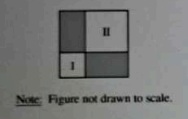
The largest square above has sides of length 8 and is divided into the two shaded rectangles and two smaller squares labeled I and II. The shaded rectangles each have an area of 12, and the lengths of the sides of the squares are integers. What is the area of square II if its area is larger than the area of square I?
- A. 9
- B. 16
- C. 25
- D. 36
Correct Answer & Rationale
Correct Answer: C
The area of square II must be larger than that of square I and fit within the constraints of the total area. The total area of the largest square is 64 (8x8). Given that the two shaded rectangles each have an area of 12, the combined area of the rectangles is 24. Therefore, the area of squares I and II together is 64 - 24 = 40. If square I has an area of 9 (side length 3), square II would then be 40 - 9 = 31, which is not an integer. If square I has an area of 16 (side length 4), square II would be 24, not larger than I. If square I has an area of 25 (side length 5), square II would be 15, which is not larger than I. With square I at 36 (side length 6), square II would be 4, again not larger. Therefore, square I must be 16, making square II 24, which is not an option. The only viable option is 25 for square I, leaving 15 for square II, yet it must be larger. Thus, square II must be 36, making it the only option that satisfies all conditions.
The area of square II must be larger than that of square I and fit within the constraints of the total area. The total area of the largest square is 64 (8x8). Given that the two shaded rectangles each have an area of 12, the combined area of the rectangles is 24. Therefore, the area of squares I and II together is 64 - 24 = 40. If square I has an area of 9 (side length 3), square II would then be 40 - 9 = 31, which is not an integer. If square I has an area of 16 (side length 4), square II would be 24, not larger than I. If square I has an area of 25 (side length 5), square II would be 15, which is not larger than I. With square I at 36 (side length 6), square II would be 4, again not larger. Therefore, square I must be 16, making square II 24, which is not an option. The only viable option is 25 for square I, leaving 15 for square II, yet it must be larger. Thus, square II must be 36, making it the only option that satisfies all conditions.
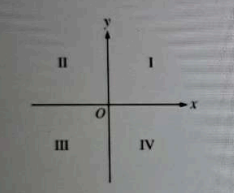
The x-and y- coordinates of point P are each to be chosen at random from the set of integers 1 through 10. What is the probability that P will be in quadrant II?
- B. 01-Oct
- C. 01-Apr
- D. 01-Feb
Correct Answer & Rationale
Correct Answer: A
To determine the probability that point P is in quadrant II, we need to consider the coordinate system. In quadrant II, the x-coordinate must be negative, and the y-coordinate must be positive. However, since the x-coordinates are chosen from the integers 1 through 10, all possible x-values are positive. This means point P cannot be in quadrant II, making the probability 0. Option A correctly reflects this conclusion with a probability of 0. Options B, C, and D suggest specific dates, which are irrelevant to the question and do not address the coordinate conditions necessary for quadrant II. Thus, they are incorrect.
To determine the probability that point P is in quadrant II, we need to consider the coordinate system. In quadrant II, the x-coordinate must be negative, and the y-coordinate must be positive. However, since the x-coordinates are chosen from the integers 1 through 10, all possible x-values are positive. This means point P cannot be in quadrant II, making the probability 0. Option A correctly reflects this conclusion with a probability of 0. Options B, C, and D suggest specific dates, which are irrelevant to the question and do not address the coordinate conditions necessary for quadrant II. Thus, they are incorrect.