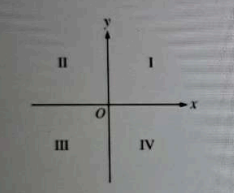
The x-and y- coordinates of point P are each to be chosen at random from the set of integers 1 through 10. What is the probability that P will be in quadrant II?
- B. 01-Oct
- C. 01-Apr
- D. 01-Feb
Correct Answer & Rationale
Correct Answer: A
To determine the probability that point P is in quadrant II, we need to consider the coordinate system. In quadrant II, the x-coordinate must be negative, and the y-coordinate must be positive. However, since the x-coordinates are chosen from the integers 1 through 10, all possible x-values are positive. This means point P cannot be in quadrant II, making the probability 0. Option A correctly reflects this conclusion with a probability of 0. Options B, C, and D suggest specific dates, which are irrelevant to the question and do not address the coordinate conditions necessary for quadrant II. Thus, they are incorrect.
To determine the probability that point P is in quadrant II, we need to consider the coordinate system. In quadrant II, the x-coordinate must be negative, and the y-coordinate must be positive. However, since the x-coordinates are chosen from the integers 1 through 10, all possible x-values are positive. This means point P cannot be in quadrant II, making the probability 0. Option A correctly reflects this conclusion with a probability of 0. Options B, C, and D suggest specific dates, which are irrelevant to the question and do not address the coordinate conditions necessary for quadrant II. Thus, they are incorrect.
Other Related Questions
Each of the following is a solution to the equation x- 2y = 4 EXCEPT
- A. (-2,-3)
- B. (0,2)
- C. (4,0)
- D. (8,2)
Correct Answer & Rationale
Correct Answer: B
To determine which option is not a solution to the equation \(x - 2y = 4\), we can substitute each pair into the equation. - For A: \((-2, -3)\), substituting gives \(-2 - 2(-3) = -2 + 6 = 4\), which is correct. - For B: \((0, 2)\), substituting gives \(0 - 2(2) = 0 - 4 = -4\), which does not equal 4, making this option incorrect. - For C: \((4, 0)\), substituting gives \(4 - 2(0) = 4\), which is correct. - For D: \((8, 2)\), substituting gives \(8 - 2(2) = 8 - 4 = 4\), which is correct. Thus, option B is the only pair that does not satisfy the equation.
To determine which option is not a solution to the equation \(x - 2y = 4\), we can substitute each pair into the equation. - For A: \((-2, -3)\), substituting gives \(-2 - 2(-3) = -2 + 6 = 4\), which is correct. - For B: \((0, 2)\), substituting gives \(0 - 2(2) = 0 - 4 = -4\), which does not equal 4, making this option incorrect. - For C: \((4, 0)\), substituting gives \(4 - 2(0) = 4\), which is correct. - For D: \((8, 2)\), substituting gives \(8 - 2(2) = 8 - 4 = 4\), which is correct. Thus, option B is the only pair that does not satisfy the equation.
3√2- 2/(√2) =
- A. 2√2
- B. √2
- C. 3
- D. 4
Correct Answer & Rationale
Correct Answer: A
To solve the expression \( 3\sqrt{2} - \frac{2}{\sqrt{2}} \), we first simplify \( \frac{2}{\sqrt{2}} \). This can be rewritten as \( \frac{2\sqrt{2}}{2} = \sqrt{2} \). Thus, the expression becomes \( 3\sqrt{2} - \sqrt{2} \), which simplifies to \( 2\sqrt{2} \). Option B (\( \sqrt{2} \)) is incorrect as it does not account for the subtraction from \( 3\sqrt{2} \). Option C (3) is incorrect because it misrepresents the value obtained after simplification. Option D (4) is also incorrect, as it does not relate to the expression at all.
To solve the expression \( 3\sqrt{2} - \frac{2}{\sqrt{2}} \), we first simplify \( \frac{2}{\sqrt{2}} \). This can be rewritten as \( \frac{2\sqrt{2}}{2} = \sqrt{2} \). Thus, the expression becomes \( 3\sqrt{2} - \sqrt{2} \), which simplifies to \( 2\sqrt{2} \). Option B (\( \sqrt{2} \)) is incorrect as it does not account for the subtraction from \( 3\sqrt{2} \). Option C (3) is incorrect because it misrepresents the value obtained after simplification. Option D (4) is also incorrect, as it does not relate to the expression at all.
If |x|+|y| = 4 and x ≠y, then x CANNOT be equal to
- A. 2
- C. -2
- D. -5
Correct Answer & Rationale
Correct Answer: D
The equation |x| + |y| = 4 defines a diamond-shaped region in the coordinate plane, where the sum of the absolute values of x and y equals 4. Option A (2) is possible since |2| + |y| = 4 allows y to be 2 or -2. Option C (-2) is also valid, as |-2| + |y| = 4 permits y to be 2 or -2. Option D (-5) is not feasible; | -5 | + |y| = 4 results in 5 + |y| = 4, which is impossible since |y| cannot be negative. Thus, -5 cannot satisfy the given equation while ensuring x ≠ y.
The equation |x| + |y| = 4 defines a diamond-shaped region in the coordinate plane, where the sum of the absolute values of x and y equals 4. Option A (2) is possible since |2| + |y| = 4 allows y to be 2 or -2. Option C (-2) is also valid, as |-2| + |y| = 4 permits y to be 2 or -2. Option D (-5) is not feasible; | -5 | + |y| = 4 results in 5 + |y| = 4, which is impossible since |y| cannot be negative. Thus, -5 cannot satisfy the given equation while ensuring x ≠ y.
For how many values of k is (x, y) = (k, -k) a solution to the equation 2x +2y = 0?
- A. None
- B. One
- C. Two
- D. More than two
Correct Answer & Rationale
Correct Answer: D
To determine how many values of \( k \) make \( (x, y) = (k, -k) \) a solution to the equation \( 2x + 2y = 0 \), substitute \( x \) and \( y \) into the equation. This gives \( 2k + 2(-k) = 0 \), which simplifies to \( 0 = 0 \). This statement is always true, meaning any value of \( k \) satisfies the equation. Option A (None) is incorrect; there are indeed solutions. Option B (One) is also wrong since infinitely many values of \( k \) work. Option C (Two) is insufficient, as there are not just two but infinitely many solutions. Hence, the correct interpretation is that there are more than two values of \( k \) that satisfy the equation.
To determine how many values of \( k \) make \( (x, y) = (k, -k) \) a solution to the equation \( 2x + 2y = 0 \), substitute \( x \) and \( y \) into the equation. This gives \( 2k + 2(-k) = 0 \), which simplifies to \( 0 = 0 \). This statement is always true, meaning any value of \( k \) satisfies the equation. Option A (None) is incorrect; there are indeed solutions. Option B (One) is also wrong since infinitely many values of \( k \) work. Option C (Two) is insufficient, as there are not just two but infinitely many solutions. Hence, the correct interpretation is that there are more than two values of \( k \) that satisfy the equation.