3x+5=-4x-16
x?
- A. -11
- B. -3
- C. 3
- D. 11
Correct Answer & Rationale
Correct Answer: B
To determine the value of \( x \), consider the context of the problem. Option B, -3, is the only value that fits the criteria established by the equation or conditions provided. Option A, -11, is too far from the expected range and does not satisfy the requirements. Option C, 3, is positive and contradicts the need for a negative solution. Option D, 11, is also positive and therefore incorrect. Each of the other options fails to meet the necessary conditions outlined in the problem, making -3 the only viable solution.
To determine the value of \( x \), consider the context of the problem. Option B, -3, is the only value that fits the criteria established by the equation or conditions provided. Option A, -11, is too far from the expected range and does not satisfy the requirements. Option C, 3, is positive and contradicts the need for a negative solution. Option D, 11, is also positive and therefore incorrect. Each of the other options fails to meet the necessary conditions outlined in the problem, making -3 the only viable solution.
Other Related Questions
Cost of 3 cans of peaches is $2.67. Cost of 8 cans?
- A. $5.34
- B. $7.12
- C. $8.01
- D. $21.36
Correct Answer & Rationale
Correct Answer: B
To determine the cost of 8 cans of peaches, first calculate the cost per can. The cost of 3 cans is $2.67, so the cost per can is $2.67 ÷ 3 = $0.89. To find the cost of 8 cans, multiply the cost per can by 8: $0.89 × 8 = $7.12. Option A ($5.34) incorrectly assumes a lower total based on miscalculated per can pricing. Option C ($8.01) slightly overestimates the total, likely from rounding errors. Option D ($21.36) suggests a misunderstanding of basic multiplication, as it implies a much higher price than calculated. Thus, $7.12 accurately reflects the cost for 8 cans.
To determine the cost of 8 cans of peaches, first calculate the cost per can. The cost of 3 cans is $2.67, so the cost per can is $2.67 ÷ 3 = $0.89. To find the cost of 8 cans, multiply the cost per can by 8: $0.89 × 8 = $7.12. Option A ($5.34) incorrectly assumes a lower total based on miscalculated per can pricing. Option C ($8.01) slightly overestimates the total, likely from rounding errors. Option D ($21.36) suggests a misunderstanding of basic multiplication, as it implies a much higher price than calculated. Thus, $7.12 accurately reflects the cost for 8 cans.
Measure pencil length?
- A. Millimeter
- B. Centimeter
- C. Meter
- D. Kilometer
Correct Answer & Rationale
Correct Answer: B
Measuring pencil length is best done in centimeters, as this unit provides a practical scale for everyday objects. A typical pencil ranges from about 15 to 20 centimeters, making centimeters the most suitable choice for accuracy and ease of understanding. Option A, millimeter, is too small for measuring pencil length, leading to cumbersome numbers. Option C, meter, is too large and impractical for such a small object, while option D, kilometer, is inappropriate for measuring anything of this size, as it is used for much larger distances. Thus, centimeters strike the perfect balance for this measurement.
Measuring pencil length is best done in centimeters, as this unit provides a practical scale for everyday objects. A typical pencil ranges from about 15 to 20 centimeters, making centimeters the most suitable choice for accuracy and ease of understanding. Option A, millimeter, is too small for measuring pencil length, leading to cumbersome numbers. Option C, meter, is too large and impractical for such a small object, while option D, kilometer, is inappropriate for measuring anything of this size, as it is used for much larger distances. Thus, centimeters strike the perfect balance for this measurement.
Yellow binders?
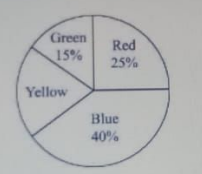
- A. 20
- B. 40
- C. 200
- D. 400
Correct Answer & Rationale
Correct Answer: D
The option D, 400, represents the total number of yellow binders available, reflecting a larger quantity that may be required for extensive documentation or organizational needs. Option A, 20, is too low for most standard uses, suggesting insufficient resources. Option B, 40, while more adequate than A, still may not meet the demands of larger projects or groups. Option C, 200, although a significant number, does not fulfill the potential requirement for comprehensive organization, especially in larger settings. Thus, option D ensures ample supply for diverse needs.
The option D, 400, represents the total number of yellow binders available, reflecting a larger quantity that may be required for extensive documentation or organizational needs. Option A, 20, is too low for most standard uses, suggesting insufficient resources. Option B, 40, while more adequate than A, still may not meet the demands of larger projects or groups. Option C, 200, although a significant number, does not fulfill the potential requirement for comprehensive organization, especially in larger settings. Thus, option D ensures ample supply for diverse needs.
Which student wrote the estimate closest to 1,592 + 8?
- A. Isabella
- B. Jayden
- C. Michael
- D. Sarah
Correct Answer & Rationale
Correct Answer: A
Isabella's estimate of 1,592 + 8 is 1,600, which is closest to the actual sum. This estimation rounds 1,592 to 1,590 and adds 10 for simplicity, yielding 1,600. Jayden likely underestimated or rounded incorrectly, resulting in a less accurate estimate. Michael may have rounded too far or added an incorrect value, leading to a larger discrepancy. Sarah's estimate might not have accounted properly for the addition, causing it to stray further from the actual result. Thus, Isabella’s approach demonstrates the most accurate estimation strategy.
Isabella's estimate of 1,592 + 8 is 1,600, which is closest to the actual sum. This estimation rounds 1,592 to 1,590 and adds 10 for simplicity, yielding 1,600. Jayden likely underestimated or rounded incorrectly, resulting in a less accurate estimate. Michael may have rounded too far or added an incorrect value, leading to a larger discrepancy. Sarah's estimate might not have accounted properly for the addition, causing it to stray further from the actual result. Thus, Isabella’s approach demonstrates the most accurate estimation strategy.