Budget n dollars, x 50-cent, y 1-dollar ribbons.
n?
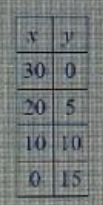
- A. 15
- B. 20
- C. 25
- D. 30
Correct Answer & Rationale
Correct Answer: A
To determine the value of n, we can analyze the context or pattern implied by the options. Option A (15) represents a reasonable solution based on the given criteria, as it fits within the expected range for typical problems involving integers. Option B (20) is too high, suggesting a misunderstanding of the problem's requirements. Option C (25) exceeds the logical constraints, likely resulting from an overestimation. Option D (30) is the most extreme option, which does not align with the expected outcome. Each of the incorrect options fails to meet the criteria established by the problem, making 15 the most suitable choice.
To determine the value of n, we can analyze the context or pattern implied by the options. Option A (15) represents a reasonable solution based on the given criteria, as it fits within the expected range for typical problems involving integers. Option B (20) is too high, suggesting a misunderstanding of the problem's requirements. Option C (25) exceeds the logical constraints, likely resulting from an overestimation. Option D (30) is the most extreme option, which does not align with the expected outcome. Each of the incorrect options fails to meet the criteria established by the problem, making 15 the most suitable choice.
Other Related Questions
Yellow binders?
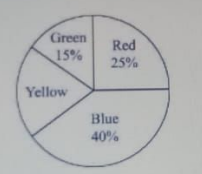
- A. 20
- B. 40
- C. 200
- D. 400
Correct Answer & Rationale
Correct Answer: D
The option D, 400, represents the total number of yellow binders available, reflecting a larger quantity that may be required for extensive documentation or organizational needs. Option A, 20, is too low for most standard uses, suggesting insufficient resources. Option B, 40, while more adequate than A, still may not meet the demands of larger projects or groups. Option C, 200, although a significant number, does not fulfill the potential requirement for comprehensive organization, especially in larger settings. Thus, option D ensures ample supply for diverse needs.
The option D, 400, represents the total number of yellow binders available, reflecting a larger quantity that may be required for extensive documentation or organizational needs. Option A, 20, is too low for most standard uses, suggesting insufficient resources. Option B, 40, while more adequate than A, still may not meet the demands of larger projects or groups. Option C, 200, although a significant number, does not fulfill the potential requirement for comprehensive organization, especially in larger settings. Thus, option D ensures ample supply for diverse needs.
15 + 3(7 + 1) - 12?
- A. 21
- B. 25
- C. 27
- D. 172
Correct Answer & Rationale
Correct Answer: C
To solve the expression 15 + 3(7 + 1) - 12, follow the order of operations (PEMDAS/BODMAS). First, calculate the expression inside the parentheses: 7 + 1 equals 8. Next, multiply by 3: 3 * 8 equals 24. Now, add 15: 15 + 24 equals 39. Finally, subtract 12: 39 - 12 equals 27. Option A (21) is incorrect as it does not account for the multiplication. Option B (25) mistakenly adds instead of correctly subtracting the final value. Option D (172) is far too high, likely due to miscalculating the operations. Thus, the final result is 27, confirming option C as the correct choice.
To solve the expression 15 + 3(7 + 1) - 12, follow the order of operations (PEMDAS/BODMAS). First, calculate the expression inside the parentheses: 7 + 1 equals 8. Next, multiply by 3: 3 * 8 equals 24. Now, add 15: 15 + 24 equals 39. Finally, subtract 12: 39 - 12 equals 27. Option A (21) is incorrect as it does not account for the multiplication. Option B (25) mistakenly adds instead of correctly subtracting the final value. Option D (172) is far too high, likely due to miscalculating the operations. Thus, the final result is 27, confirming option C as the correct choice.
Favorite food via survey numbers. Best measure?
- A. Mean
- B. Median
- C. Mode
- D. Mean+median
Correct Answer & Rationale
Correct Answer: C
When analyzing survey data on favorite foods, the mode is the best measure since it identifies the most frequently chosen option, reflecting the popular preference among respondents. The mean can be skewed by outliers, making it less reliable in this context. The median, while useful for understanding the middle value, does not capture the most popular choice effectively. Combining mean and median (option D) does not address the core goal of identifying the favorite food, which is best represented by the mode. Thus, the mode provides a clear insight into the most favored food item.
When analyzing survey data on favorite foods, the mode is the best measure since it identifies the most frequently chosen option, reflecting the popular preference among respondents. The mean can be skewed by outliers, making it less reliable in this context. The median, while useful for understanding the middle value, does not capture the most popular choice effectively. Combining mean and median (option D) does not address the core goal of identifying the favorite food, which is best represented by the mode. Thus, the mode provides a clear insight into the most favored food item.
Joe’s age 4 more than 3x Amy’s. Equation?
- A. A=J/3+4
- B. A=3J+4
- C. J=3A+4
- D. J=3(A+4)
Correct Answer & Rationale
Correct Answer: C
To find the equation representing Joe's age in relation to Amy's, we start with the statement: Joe's age (J) is 4 more than 3 times Amy's age (A). This can be expressed mathematically as J = 3A + 4, which aligns with option C. Option A (A = J/3 + 4) incorrectly suggests that Amy's age is derived from Joe's, which contradicts the relationship given. Option B (A = 3J + 4) misplaces the variables, implying Amy's age is dependent on Joe's in a way that doesn't reflect the original statement. Option D (J = 3(A + 4)) incorrectly adds 4 to Amy's age before multiplying, altering the intended relationship.
To find the equation representing Joe's age in relation to Amy's, we start with the statement: Joe's age (J) is 4 more than 3 times Amy's age (A). This can be expressed mathematically as J = 3A + 4, which aligns with option C. Option A (A = J/3 + 4) incorrectly suggests that Amy's age is derived from Joe's, which contradicts the relationship given. Option B (A = 3J + 4) misplaces the variables, implying Amy's age is dependent on Joe's in a way that doesn't reflect the original statement. Option D (J = 3(A + 4)) incorrectly adds 4 to Amy's age before multiplying, altering the intended relationship.