Which statement from Common Sense provides evidence that the author Thomas Paine supported American independence?
- A. "Absolute governments have this advantage with them, that they are simple..."
- B. "I challenge the warmest advocate for reconciliation, to [show], a single advantage that this continent can reap, by being connected with Great Britain."
- C. "The prejudice of Englishmen, in [favor] of their own government arises as much or more from national pride than reason."
- D. "Society in every state is a blessing, but government even in its best state is but a necessary evil."
Correct Answer & Rationale
Correct Answer: B
Option B provides clear evidence of Thomas Paine's support for American independence by challenging the benefits of remaining connected to Great Britain. By asking advocates for reconciliation to demonstrate any advantages, Paine emphasizes the futility of such ties and advocates for autonomy. Option A discusses the simplicity of absolute governments, which does not directly address the question of American independence. Option C critiques English national pride but lacks a direct link to the argument for independence. Option D presents a philosophical view on government but does not specifically advocate for breaking away from British rule.
Option B provides clear evidence of Thomas Paine's support for American independence by challenging the benefits of remaining connected to Great Britain. By asking advocates for reconciliation to demonstrate any advantages, Paine emphasizes the futility of such ties and advocates for autonomy. Option A discusses the simplicity of absolute governments, which does not directly address the question of American independence. Option C critiques English national pride but lacks a direct link to the argument for independence. Option D presents a philosophical view on government but does not specifically advocate for breaking away from British rule.
Other Related Questions
Which statement identifies the purpose of President Nixon's message?
- A. to convince Congress that technological advancement and population growth must be slowed to protect the environment
- B. to convince Congress that industrial polluters of the air and water should not pay for cleaning the environment
- C. to convince Congress that it must take part in action to address human damage to the environment
- D. to convince Congress that there should be no benefits for businesses that pollute the environment
Correct Answer & Rationale
Correct Answer: C
President Nixon's message aimed to mobilize Congress to actively engage in addressing environmental degradation caused by human activities. This focus on collective action underscores the urgency of legislative involvement in environmental protection. Option A misinterprets the goal, as Nixon did not advocate for slowing technological advancement but rather for responsible management. Option B inaccurately suggests that he supported industrial polluters avoiding responsibility, which contradicts his environmental stance. Option D implies a complete lack of support for businesses, neglecting the balanced approach Nixon promoted towards regulatory measures and economic growth.
President Nixon's message aimed to mobilize Congress to actively engage in addressing environmental degradation caused by human activities. This focus on collective action underscores the urgency of legislative involvement in environmental protection. Option A misinterprets the goal, as Nixon did not advocate for slowing technological advancement but rather for responsible management. Option B inaccurately suggests that he supported industrial polluters avoiding responsibility, which contradicts his environmental stance. Option D implies a complete lack of support for businesses, neglecting the balanced approach Nixon promoted towards regulatory measures and economic growth.
What is the meaning of the word entrenched as used in this excerpt?
- A. in control
- B. strongly defended
- C. established and unlikely to change
- D. surrounded and unable to move
Correct Answer & Rationale
Correct Answer: C
The term "entrenched" conveys the idea of something that is firmly established and resistant to change, aligning with option C. This suggests a deep-rooted nature, often implying that it has become a significant part of a system or belief. Option A, "in control," does not capture the essence of being deeply embedded or resistant to alteration. Option B, "strongly defended," implies a protective stance rather than a state of being firmly established. Option D, "surrounded and unable to move," suggests physical confinement rather than the figurative sense of being firmly set in place.
The term "entrenched" conveys the idea of something that is firmly established and resistant to change, aligning with option C. This suggests a deep-rooted nature, often implying that it has become a significant part of a system or belief. Option A, "in control," does not capture the essence of being deeply embedded or resistant to alteration. Option B, "strongly defended," implies a protective stance rather than a state of being firmly established. Option D, "surrounded and unable to move," suggests physical confinement rather than the figurative sense of being firmly set in place.
According to the information in the first graph, which statement correctly describes the period from 2006 to 2008?
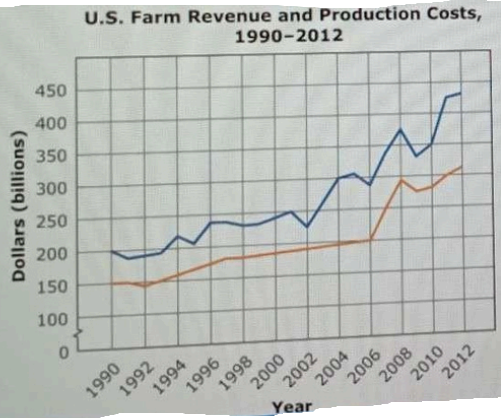
- A. Gross farm income continued the decline that had characterized previous years.
- B. Gross farm income increased despite increases in production costs.
- C. Increases in production costs caused gross farm income to decline.
- D. Decreases in production costs continued throughout this period.
Correct Answer & Rationale
Correct Answer: B
During the period from 2006 to 2008, gross farm income saw an increase, even as production costs rose. This indicates that farmers managed to offset higher expenses with increased revenue. Option A is incorrect as it suggests a continuation of decline, which contradicts the data showing growth in income. Option C misinterprets the relationship between rising costs and income, as income actually increased despite those costs. Option D is inaccurate because it implies a consistent decrease in production costs, which is not supported by the graph indicating rising expenses during this timeframe.
During the period from 2006 to 2008, gross farm income saw an increase, even as production costs rose. This indicates that farmers managed to offset higher expenses with increased revenue. Option A is incorrect as it suggests a continuation of decline, which contradicts the data showing growth in income. Option C misinterprets the relationship between rising costs and income, as income actually increased despite those costs. Option D is inaccurate because it implies a consistent decrease in production costs, which is not supported by the graph indicating rising expenses during this timeframe.
The newspaper writer's opinion that
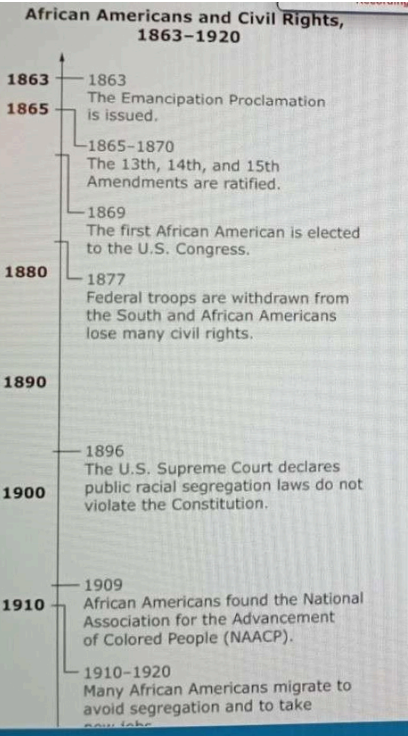
- A. slavery should have been preserved
- B. Jim Crow laws should have been stopped
- C. Jim Crow laws benefited the south
- D. Jim Crow laws had benefited the South constitutional changes were successful
Correct Answer & Rationale
Correct Answer: C
The opinion that Jim Crow laws benefited the South reflects a perspective that views these discriminatory laws as advantageous for maintaining social order and economic benefits for white populations, despite their oppressive nature. Option A suggests a support for slavery, which is widely condemned and not a mainstream opinion. Option B advocates for the cessation of Jim Crow laws, opposing the notion that they were beneficial. Option D incorrectly implies that constitutional changes related to Jim Crow were successful, overlooking the ongoing struggles for civil rights and equality. Thus, option C captures a historically inaccurate yet prevalent viewpoint of the time.
The opinion that Jim Crow laws benefited the South reflects a perspective that views these discriminatory laws as advantageous for maintaining social order and economic benefits for white populations, despite their oppressive nature. Option A suggests a support for slavery, which is widely condemned and not a mainstream opinion. Option B advocates for the cessation of Jim Crow laws, opposing the notion that they were beneficial. Option D incorrectly implies that constitutional changes related to Jim Crow were successful, overlooking the ongoing struggles for civil rights and equality. Thus, option C captures a historically inaccurate yet prevalent viewpoint of the time.