Markets
The interaction between the buyers and sellers of a good or service is called a market. Two important economic markets are factor markets and product markets.
The factor market refers to the buying and selling of the factors of production. The factors of production (land, labor, capital, and entrepreneurship) are the resources used to produce goods and services.
Producers offer goods and services for sale in product markets. Individuals spend the money they have earned in the factor market (for instance, wages or the income from selling land) to make purchases in product markets.
Which statement is based on the text?
- A. Individuals spend their income in factor markets.
- B. Entrepreneurs profit from participation in product markets.
- C. Individuals sell their labor in factor markets.
- D. Resources are traded in product markets.
Correct Answer & Rationale
Correct Answer: C
Option C accurately reflects the concept that individuals offer their labor in factor markets, where resources like labor are exchanged for wages. This aligns with economic principles regarding labor supply. Option A is incorrect since individuals do not spend income in factor markets; rather, they purchase goods and services in product markets. Option B misrepresents the role of entrepreneurs, who primarily earn profits through innovation and sales in product markets, not simply from participation. Option D is also misleading, as resources are exchanged in factor markets, while product markets focus on the sale of finished goods and services.
Option C accurately reflects the concept that individuals offer their labor in factor markets, where resources like labor are exchanged for wages. This aligns with economic principles regarding labor supply. Option A is incorrect since individuals do not spend income in factor markets; rather, they purchase goods and services in product markets. Option B misrepresents the role of entrepreneurs, who primarily earn profits through innovation and sales in product markets, not simply from participation. Option D is also misleading, as resources are exchanged in factor markets, while product markets focus on the sale of finished goods and services.
Other Related Questions
Based on the excerpts, which speaker would agree with each statement below? Drag each statement into the box labeled with that speaker's name. If neither would agree with a statement, drag it to the box labeled "Neither."
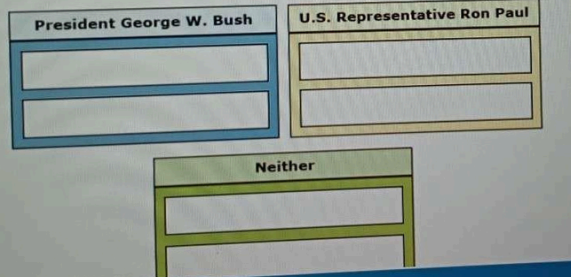
- A. Congress should spend money public education.
- B. Schools should meet federal education guidelines.
- C. Parents should hold public schools accountable.
- D. Local districts should set school guidelines.
Correct Answer & Rationale
Correct Answer:
Speaker A likely supports the idea that Congress should spend money on public education, as this aligns with a belief in federal investment in education for equitable access. Speaker B would agree that schools should meet federal education guidelines, as this emphasizes the importance of uniform standards for educational quality and accountability. Speaker C advocates for parental accountability in public schools, reflecting the belief that parents play a vital role in monitoring and improving educational outcomes. Speaker D likely supports the idea that local districts should set school guidelines, as this allows for tailored approaches that reflect community needs and values. If neither speaker aligns with a statement, it belongs in the "Neither" category.
Speaker A likely supports the idea that Congress should spend money on public education, as this aligns with a belief in federal investment in education for equitable access. Speaker B would agree that schools should meet federal education guidelines, as this emphasizes the importance of uniform standards for educational quality and accountability. Speaker C advocates for parental accountability in public schools, reflecting the belief that parents play a vital role in monitoring and improving educational outcomes. Speaker D likely supports the idea that local districts should set school guidelines, as this allows for tailored approaches that reflect community needs and values. If neither speaker aligns with a statement, it belongs in the "Neither" category.
What is the meaning of confederation in this passage?
- A. a government in which the whole population of a country votes to make laws for the people
- B. a political union in which power is divided between a strong central authority and the various other political units
- C. a political union in which the component units retain significant independence from the central government
- D. a government in which people vote to elect representatives who make laws for the people
Correct Answer & Rationale
Correct Answer: C
Confederation refers to a political union where individual components maintain considerable autonomy while cooperating for mutual benefit. Option C accurately captures this definition, emphasizing the independence of component units from the central authority. Option A describes a direct democracy, which is not aligned with the concept of confederation. Option B suggests a balance of power that leans towards a strong central authority, contradicting the essence of a confederation. Option D outlines a representative democracy, which does not inherently involve the independence of component units, thus misrepresenting the nature of a confederation.
Confederation refers to a political union where individual components maintain considerable autonomy while cooperating for mutual benefit. Option C accurately captures this definition, emphasizing the independence of component units from the central authority. Option A describes a direct democracy, which is not aligned with the concept of confederation. Option B suggests a balance of power that leans towards a strong central authority, contradicting the essence of a confederation. Option D outlines a representative democracy, which does not inherently involve the independence of component units, thus misrepresenting the nature of a confederation.
The newspaper writer's opinion that
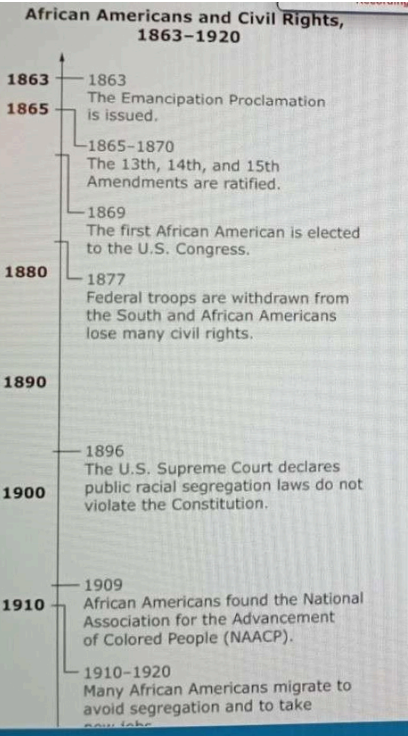
- A. slavery should have been preserved
- B. Jim Crow laws should have been stopped
- C. Jim Crow laws benefited the south
- D. Jim Crow laws had benefited the South constitutional changes were successful
Correct Answer & Rationale
Correct Answer: C
The opinion that Jim Crow laws benefited the South reflects a perspective that views these discriminatory laws as advantageous for maintaining social order and economic benefits for white populations, despite their oppressive nature. Option A suggests a support for slavery, which is widely condemned and not a mainstream opinion. Option B advocates for the cessation of Jim Crow laws, opposing the notion that they were beneficial. Option D incorrectly implies that constitutional changes related to Jim Crow were successful, overlooking the ongoing struggles for civil rights and equality. Thus, option C captures a historically inaccurate yet prevalent viewpoint of the time.
The opinion that Jim Crow laws benefited the South reflects a perspective that views these discriminatory laws as advantageous for maintaining social order and economic benefits for white populations, despite their oppressive nature. Option A suggests a support for slavery, which is widely condemned and not a mainstream opinion. Option B advocates for the cessation of Jim Crow laws, opposing the notion that they were beneficial. Option D incorrectly implies that constitutional changes related to Jim Crow were successful, overlooking the ongoing struggles for civil rights and equality. Thus, option C captures a historically inaccurate yet prevalent viewpoint of the time.
Based on the timeline and the map, what was one way African Americans dealt with Jim Crow laws?
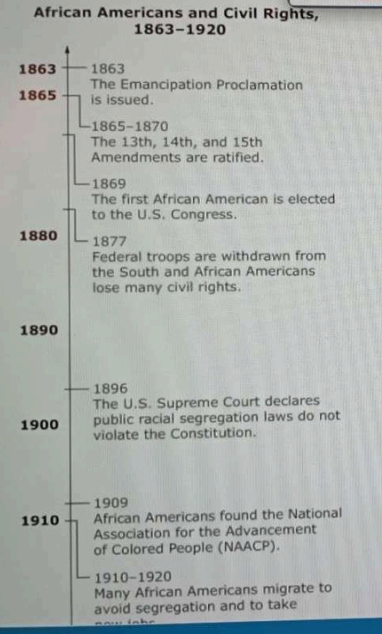
- A. by taking service jobs in southern cities
- B. by seeking factory jobs in urban areas of the North
- C. by becoming tenant farmers in other parts of the South
- D. by gaining technical skills in northern schools
Correct Answer & Rationale
Correct Answer: B
African Americans responded to Jim Crow laws by seeking factory jobs in urban areas of the North, as this migration offered better economic opportunities and a chance to escape oppressive conditions in the South. Option A, taking service jobs in southern cities, often perpetuated the same discriminatory practices found under Jim Crow. Option C, becoming tenant farmers in other parts of the South, did not provide significant relief from the systemic racism and economic hardship prevalent in that region. Option D, gaining technical skills in northern schools, while beneficial, was not a widespread or immediate solution compared to the mass migration to northern factories.
African Americans responded to Jim Crow laws by seeking factory jobs in urban areas of the North, as this migration offered better economic opportunities and a chance to escape oppressive conditions in the South. Option A, taking service jobs in southern cities, often perpetuated the same discriminatory practices found under Jim Crow. Option C, becoming tenant farmers in other parts of the South, did not provide significant relief from the systemic racism and economic hardship prevalent in that region. Option D, gaining technical skills in northern schools, while beneficial, was not a widespread or immediate solution compared to the mass migration to northern factories.