War Powers in the U.S. Constitution
The framers of the U.S. Constitution divided war powers between Congress and the president. Congress has the power to declare war and to create and fund the military. The president, as commander in chief, has the power to command and control U.S. military forces.
In 1950, President Harry Truman deployed U.S. troops in South Korea as part of a United Nations military force. President Truman referred to the Korean War as a "police action" meant to uphold the rule of law. He never asked Congress for a declaration of war and one was never delivered. Later, as a result of the Vietnam War, Congress passed legislation requiring the president to withdraw troops from combat within 60 days if Congress has not declared war or approved the use of force.
Nevertheless, while Congress and the president continue to argue over war powers, the division of these powers in the U.S. Constitution remains unchanged.
Which statement provides the main idea of the passage?
- A. The founders understood the importance of dividing war powers in the U.S. Constitution.
- B. President Truman used presidential war powers to send troops to South Korea.
- C. Congress restricted presidential war powers as a result of the Vietnam War.
- D. A conflict over presidential war powers exists in the U.S. government.
Correct Answer & Rationale
Correct Answer: D
Option D effectively captures the overarching theme of the passage by highlighting the ongoing conflict regarding presidential war powers within the U.S. government. This statement reflects the central issue discussed throughout the text. Option A, while relevant, focuses solely on the founders' intentions rather than the current implications of war powers. Option B is too specific, addressing a single historical instance rather than the broader concept of power dynamics. Option C, although it mentions a relevant event, limits the discussion to the Vietnam War and does not encompass the ongoing nature of the conflict over these powers.
Option D effectively captures the overarching theme of the passage by highlighting the ongoing conflict regarding presidential war powers within the U.S. government. This statement reflects the central issue discussed throughout the text. Option A, while relevant, focuses solely on the founders' intentions rather than the current implications of war powers. Option B is too specific, addressing a single historical instance rather than the broader concept of power dynamics. Option C, although it mentions a relevant event, limits the discussion to the Vietnam War and does not encompass the ongoing nature of the conflict over these powers.
Other Related Questions
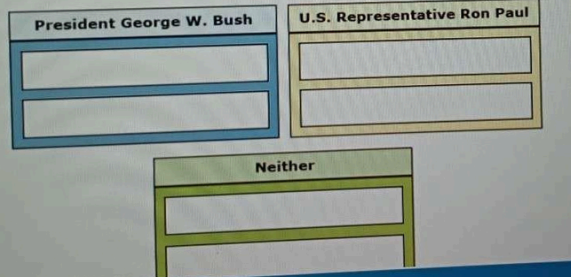
Based on the excerpts, which speaker would agree with each statement below? Drag each statement into the box labeled with that speaker's name. If neither would agree with a statement, drag it to the box labeled "Neither."
- A. Congress should spend money public education.
- B. Schools should meet federal education guidelines.
- C. Parents should hold public schools accountable.
- D. Local districts should set school guidelines.
Correct Answer & Rationale
Correct Answer:
Speaker A likely supports the idea that Congress should spend money on public education, as this aligns with a belief in federal investment in education for equitable access. Speaker B would agree that schools should meet federal education guidelines, as this emphasizes the importance of uniform standards for educational quality and accountability. Speaker C advocates for parental accountability in public schools, reflecting the belief that parents play a vital role in monitoring and improving educational outcomes. Speaker D likely supports the idea that local districts should set school guidelines, as this allows for tailored approaches that reflect community needs and values. If neither speaker aligns with a statement, it belongs in the "Neither" category.
Speaker A likely supports the idea that Congress should spend money on public education, as this aligns with a belief in federal investment in education for equitable access. Speaker B would agree that schools should meet federal education guidelines, as this emphasizes the importance of uniform standards for educational quality and accountability. Speaker C advocates for parental accountability in public schools, reflecting the belief that parents play a vital role in monitoring and improving educational outcomes. Speaker D likely supports the idea that local districts should set school guidelines, as this allows for tailored approaches that reflect community needs and values. If neither speaker aligns with a statement, it belongs in the "Neither" category.
What basic assumption behind Marshall's remarks is not behind Reagan's remarks?
- A. The framers of the U.S. Constitution have received more credit than they deserve for the governmental protections Americans enjoy.
- B. The framers of the U.S. Constitution have been credited with creating a document that protects all free people around the world.
- C. The U.S. Constitution created a government whose promises are yet to be realized by many around the world.
- D. The U.S. Constitution created a government based on the principles expressed in the Declaration of Independence.
Correct Answer & Rationale
Correct Answer: A
Marshall's remarks imply a critical view of the framers' contributions, suggesting they may not deserve as much credit for governmental protections as commonly believed. This contrasts with Reagan's perspective, which typically emphasizes the positive legacy of the framers. Option B incorrectly assumes that both figures share the belief in the global impact of the Constitution, which Reagan often highlighted. Option C suggests an acknowledgment of unrealized promises, aligning with both perspectives, while option D reinforces a foundational agreement on principles that both figures would likely support. Thus, A stands out as the unique assumption absent in Reagan's remarks.
Marshall's remarks imply a critical view of the framers' contributions, suggesting they may not deserve as much credit for governmental protections as commonly believed. This contrasts with Reagan's perspective, which typically emphasizes the positive legacy of the framers. Option B incorrectly assumes that both figures share the belief in the global impact of the Constitution, which Reagan often highlighted. Option C suggests an acknowledgment of unrealized promises, aligning with both perspectives, while option D reinforces a foundational agreement on principles that both figures would likely support. Thus, A stands out as the unique assumption absent in Reagan's remarks.
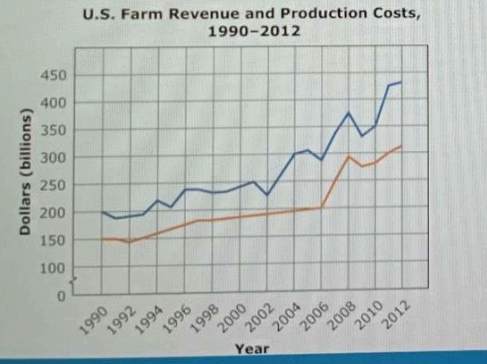
Which prediction is supported by both graphs?
- A. The average wage for farm workers will decrease..
- B. The average cost for agricultural produce will decrease.
- C. The operating cost of running a farm will increase.
- D. The number of people required for producing food will increase.
Correct Answer & Rationale
Correct Answer: C
Option C is supported by both graphs, indicating an upward trend in operational costs due to factors like inflation and increased resource prices. This aligns with economic patterns observed in the agricultural sector. Option A is incorrect as both graphs do not show a decline in farm worker wages; rather, they suggest stability or growth. Option B is misleading; the graphs do not reflect a decrease in agricultural produce costs, which often correlate with rising operational expenses. Option D is also unsupported, as the data does not indicate an increase in labor requirements, but rather highlights efficiency improvements in farming practices.
Option C is supported by both graphs, indicating an upward trend in operational costs due to factors like inflation and increased resource prices. This aligns with economic patterns observed in the agricultural sector. Option A is incorrect as both graphs do not show a decline in farm worker wages; rather, they suggest stability or growth. Option B is misleading; the graphs do not reflect a decrease in agricultural produce costs, which often correlate with rising operational expenses. Option D is also unsupported, as the data does not indicate an increase in labor requirements, but rather highlights efficiency improvements in farming practices.
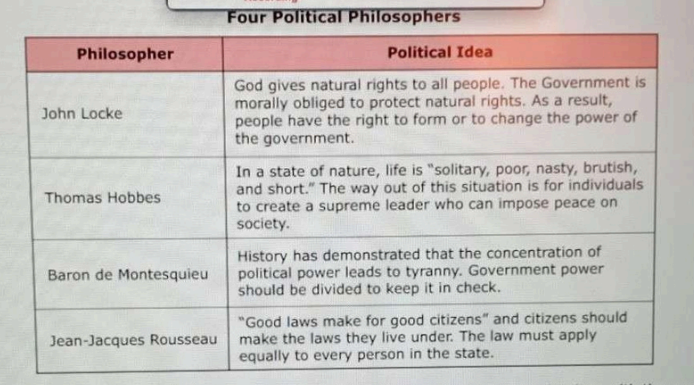
According to this information, which philosopher would most likely support the presidential power to appoint federal judges with the consent of the U.S. Senate?
- A. Thomas Hobbes
- B. Baron de Montesquieu
- C. Jean-Jacques Rousseau
- D. John Locke
Correct Answer & Rationale
Correct Answer: B
Baron de Montesquieu advocated for the separation of powers within government, emphasizing the need for checks and balances to prevent tyranny. His support for a collaborative process in appointing judges aligns with the presidential power requiring Senate consent, ensuring that no single branch holds excessive authority. Thomas Hobbes, on the other hand, favored a strong central authority and would likely support concentrated power without the need for Senate approval. Jean-Jacques Rousseau emphasized the general will and popular sovereignty, which does not directly address the judicial appointment process. John Locke valued consent and governance but did not specifically advocate for the Senate's role in judicial appointments.
Baron de Montesquieu advocated for the separation of powers within government, emphasizing the need for checks and balances to prevent tyranny. His support for a collaborative process in appointing judges aligns with the presidential power requiring Senate consent, ensuring that no single branch holds excessive authority. Thomas Hobbes, on the other hand, favored a strong central authority and would likely support concentrated power without the need for Senate approval. Jean-Jacques Rousseau emphasized the general will and popular sovereignty, which does not directly address the judicial appointment process. John Locke valued consent and governance but did not specifically advocate for the Senate's role in judicial appointments.