Associative operations? Select ALL.
- A. Addition
- B. Subtraction
- C. Multiplication
- D. Division
- E. Exponentiation
Correct Answer & Rationale
Correct Answer: A,C
Associative operations allow the grouping of numbers in different ways without changing the result. Addition (A) and multiplication (C) are associative; for example, (a + b) + c = a + (b + c) and (a × b) × c = a × (b × c). Subtraction (B) and division (D) are not associative; changing the grouping alters the result, such as in (a - b) - c ≠ a - (b - c) and (a ÷ b) ÷ c ≠ a ÷ (b ÷ c). Exponentiation (E) is also not associative, as (a^b)^c ≠ a^(b^c). Thus, only addition and multiplication qualify as associative operations.
Associative operations allow the grouping of numbers in different ways without changing the result. Addition (A) and multiplication (C) are associative; for example, (a + b) + c = a + (b + c) and (a × b) × c = a × (b × c). Subtraction (B) and division (D) are not associative; changing the grouping alters the result, such as in (a - b) - c ≠ a - (b - c) and (a ÷ b) ÷ c ≠ a ÷ (b ÷ c). Exponentiation (E) is also not associative, as (a^b)^c ≠ a^(b^c). Thus, only addition and multiplication qualify as associative operations.
Other Related Questions
n?
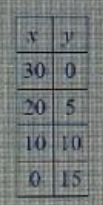
- A. 15
- B. 20
- C. 25
- D. 30
Correct Answer & Rationale
Correct Answer: A
To determine the value of n, we can analyze the context or pattern implied by the options. Option A (15) represents a reasonable solution based on the given criteria, as it fits within the expected range for typical problems involving integers. Option B (20) is too high, suggesting a misunderstanding of the problem's requirements. Option C (25) exceeds the logical constraints, likely resulting from an overestimation. Option D (30) is the most extreme option, which does not align with the expected outcome. Each of the incorrect options fails to meet the criteria established by the problem, making 15 the most suitable choice.
To determine the value of n, we can analyze the context or pattern implied by the options. Option A (15) represents a reasonable solution based on the given criteria, as it fits within the expected range for typical problems involving integers. Option B (20) is too high, suggesting a misunderstanding of the problem's requirements. Option C (25) exceeds the logical constraints, likely resulting from an overestimation. Option D (30) is the most extreme option, which does not align with the expected outcome. Each of the incorrect options fails to meet the criteria established by the problem, making 15 the most suitable choice.
Rounds to 87.5 in tenths?
- A. 88
- B. 87.56
- C. 87.459
- D. 87.05
Correct Answer & Rationale
Correct Answer: C
When rounding to the nearest tenth, the digit in the hundredths place determines whether to round up or down. For 87.5, the first digit after the decimal is 5, indicating that we round up. Option A (88) rounds to the nearest whole number, not the nearest tenth. Option B (87.56) rounds to 87.6, which is higher than 87.5. Option D (87.05) rounds to 87.1, which is lower. Only option C (87.459) rounds to 87.5 when considering the tenths place, making it the only valid choice for rounding to 87.5 in tenths.
When rounding to the nearest tenth, the digit in the hundredths place determines whether to round up or down. For 87.5, the first digit after the decimal is 5, indicating that we round up. Option A (88) rounds to the nearest whole number, not the nearest tenth. Option B (87.56) rounds to 87.6, which is higher than 87.5. Option D (87.05) rounds to 87.1, which is lower. Only option C (87.459) rounds to 87.5 when considering the tenths place, making it the only valid choice for rounding to 87.5 in tenths.
36 pencils in equal groups? Select THREE.
- A. 3
- B. 4
- C. 5
- D. 6
- E. 8
Correct Answer & Rationale
Correct Answer: A,B,D
To determine how many equal groups can be formed from 36 pencils, we need to identify the factors of 36. Option A (3) is valid because 36 ÷ 3 = 12, resulting in 12 pencils per group. Option B (4) is also correct since 36 ÷ 4 = 9, yielding 9 pencils per group. Option D (6) works as well, as 36 ÷ 6 = 6, giving 6 pencils per group. Options C (5) and E (8) are incorrect because 36 is not divisible by 5 (36 ÷ 5 = 7.2, which is not a whole number) and 8 (36 ÷ 8 = 4.5, also not a whole number). Thus, only 3, 4, and 6 are valid factors of 36.
To determine how many equal groups can be formed from 36 pencils, we need to identify the factors of 36. Option A (3) is valid because 36 ÷ 3 = 12, resulting in 12 pencils per group. Option B (4) is also correct since 36 ÷ 4 = 9, yielding 9 pencils per group. Option D (6) works as well, as 36 ÷ 6 = 6, giving 6 pencils per group. Options C (5) and E (8) are incorrect because 36 is not divisible by 5 (36 ÷ 5 = 7.2, which is not a whole number) and 8 (36 ÷ 8 = 4.5, also not a whole number). Thus, only 3, 4, and 6 are valid factors of 36.
Cover floor? Select ALL.
- A. 15s4r
- B. 8s10r
- C. 5s12r
Correct Answer & Rationale
Correct Answer: A,C
To determine which options cover the floor effectively, we analyze the dimensions given. Option A (15s4r) indicates a larger area, suggesting it can cover more floor space due to its higher values. This makes it suitable for extensive coverage. Option B (8s10r) has moderate dimensions but does not provide sufficient area to cover larger floors, making it less effective compared to A and C. Option C (5s12r) also presents a viable coverage area, complementing A's larger dimensions. Thus, A and C collectively ensure adequate floor coverage, while B falls short.
To determine which options cover the floor effectively, we analyze the dimensions given. Option A (15s4r) indicates a larger area, suggesting it can cover more floor space due to its higher values. This makes it suitable for extensive coverage. Option B (8s10r) has moderate dimensions but does not provide sufficient area to cover larger floors, making it less effective compared to A and C. Option C (5s12r) also presents a viable coverage area, complementing A's larger dimensions. Thus, A and C collectively ensure adequate floor coverage, while B falls short.