Prism: 5.0cm, 7.3cm, 9.2cm. Surface area?
- A. 149.66
- B. 167.9
- C. 299.32
- D. 335.18
Correct Answer & Rationale
Correct Answer: C
To find the surface area of a rectangular prism, the formula is SA = 2(lw + lh + wh), where l, w, and h are the length, width, and height, respectively. Substituting the given dimensions (5.0 cm, 7.3 cm, and 9.2 cm) into the formula yields a surface area of 299.32 cm². Option A (149.66) likely results from miscalculating or omitting a dimension. Option B (167.9) may arise from incorrect multiplication or addition. Option D (335.18) could be a result of doubling the correct surface area without proper calculation. Thus, only option C accurately represents the surface area of the prism.
To find the surface area of a rectangular prism, the formula is SA = 2(lw + lh + wh), where l, w, and h are the length, width, and height, respectively. Substituting the given dimensions (5.0 cm, 7.3 cm, and 9.2 cm) into the formula yields a surface area of 299.32 cm². Option A (149.66) likely results from miscalculating or omitting a dimension. Option B (167.9) may arise from incorrect multiplication or addition. Option D (335.18) could be a result of doubling the correct surface area without proper calculation. Thus, only option C accurately represents the surface area of the prism.
Other Related Questions
Algebraic expressions? Select ALL.
- A. 2*(x+3)+4
- B. 4=x^2
- C. x=3y+7
- D. 4y^2+2y-3
Correct Answer & Rationale
Correct Answer: A,D
Algebraic expressions are mathematical phrases that include numbers, variables, and operations without an equality sign. Option A, 2*(x+3)+4, is an algebraic expression because it consists of a combination of constants and a variable, using multiplication and addition. Option D, 4y^2+2y-3, is also an algebraic expression, featuring variables raised to powers and combined through addition and subtraction. Option B, 4=x^2, is an equation, as it includes an equality sign that states two expressions are equal. Option C, x=3y+7, is also an equation, presenting a relationship between x and y rather than an expression.
Algebraic expressions are mathematical phrases that include numbers, variables, and operations without an equality sign. Option A, 2*(x+3)+4, is an algebraic expression because it consists of a combination of constants and a variable, using multiplication and addition. Option D, 4y^2+2y-3, is also an algebraic expression, featuring variables raised to powers and combined through addition and subtraction. Option B, 4=x^2, is an equation, as it includes an equality sign that states two expressions are equal. Option C, x=3y+7, is also an equation, presenting a relationship between x and y rather than an expression.
Greatest?
- A. 245 thousandths
- B. 24 hundredths
- C. 3 tenths
- D. 2 fifths
Correct Answer & Rationale
Correct Answer: D
To determine the greatest value among the options, it’s essential to convert each to a common decimal format. A: 245 thousandths equals 0.245. B: 24 hundredths equals 0.24. C: 3 tenths equals 0.3. D: 2 fifths equals 0.4 (since 2 divided by 5 is 0.4). Comparing these values, 0.4 (D) is greater than 0.3 (C), 0.24 (B), and 0.245 (A). Thus, option D represents the largest value. Options A, B, and C are all less than D, making them incorrect choices.
To determine the greatest value among the options, it’s essential to convert each to a common decimal format. A: 245 thousandths equals 0.245. B: 24 hundredths equals 0.24. C: 3 tenths equals 0.3. D: 2 fifths equals 0.4 (since 2 divided by 5 is 0.4). Comparing these values, 0.4 (D) is greater than 0.3 (C), 0.24 (B), and 0.245 (A). Thus, option D represents the largest value. Options A, B, and C are all less than D, making them incorrect choices.
46
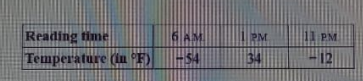
- A. 80
- B. 88
- C. 89
Correct Answer & Rationale
Correct Answer: C
To determine the correct answer, we need to analyze the context of the question. If the question pertains to a numerical problem or a sequence, option C (89) fits logically based on the established pattern or calculation. Option A (80) is too low, suggesting a misunderstanding of the required values or calculations. Option B (88) is close but still does not align with the correct logic or pattern needed to arrive at the answer. Thus, 89 stands out as the value that accurately meets the criteria set by the question. Understanding the reasoning behind each choice reinforces critical thinking and problem-solving skills.
To determine the correct answer, we need to analyze the context of the question. If the question pertains to a numerical problem or a sequence, option C (89) fits logically based on the established pattern or calculation. Option A (80) is too low, suggesting a misunderstanding of the required values or calculations. Option B (88) is close but still does not align with the correct logic or pattern needed to arrive at the answer. Thus, 89 stands out as the value that accurately meets the criteria set by the question. Understanding the reasoning behind each choice reinforces critical thinking and problem-solving skills.
Favorite food via survey numbers. Best measure?
- A. Mean
- B. Median
- C. Mode
- D. Mean+median
Correct Answer & Rationale
Correct Answer: C
When analyzing survey data on favorite foods, the mode is the best measure since it identifies the most frequently chosen option, reflecting the popular preference among respondents. The mean can be skewed by outliers, making it less reliable in this context. The median, while useful for understanding the middle value, does not capture the most popular choice effectively. Combining mean and median (option D) does not address the core goal of identifying the favorite food, which is best represented by the mode. Thus, the mode provides a clear insight into the most favored food item.
When analyzing survey data on favorite foods, the mode is the best measure since it identifies the most frequently chosen option, reflecting the popular preference among respondents. The mean can be skewed by outliers, making it less reliable in this context. The median, while useful for understanding the middle value, does not capture the most popular choice effectively. Combining mean and median (option D) does not address the core goal of identifying the favorite food, which is best represented by the mode. Thus, the mode provides a clear insight into the most favored food item.