The excerpt below is from the 1831 U.S. Supreme Court case Cherokee Nation v. Georgia.
The Indian territory is admitted to compose a part of the United States. They acknowledge themselves in their treaties to be under the protection of the United States; they admit that the United States shall have the sole and exclusive right of regulating the trade with them, and managing all their affairs as they think proper... Treaties were made with some tribes... by which they ceded all their lands... [and] they admit their dependence.
They look to our government for protection; rely upon its kindness and its power... and address the president as their great father.
... [T]he Cherokee nation. retains its usages and customs and self government, greatly improved by the civilization which it has been the policy of the United States to encourage and foster among them.
This excerpt is taken from the public domain.
What is the main point of view expressed in this excerpt?
- A. The Cherokee Nation is equal to the United States in terms of trade and government.
- B. The Cherokee Nation is dependent on the United States for basic necessities and survival.
- C. The Cherokee Nation is dependent on the United States for guidance and protection.
- D. The Cherokee Nation is a separate state that deals with the United States as a foreign country.
Correct Answer & Rationale
Correct Answer: C
The excerpt emphasizes the Cherokee Nation's reliance on the United States for guidance and protection, reflecting a relationship where the Cherokee seek support in navigating external challenges. Option A misrepresents the dynamics by suggesting equality in trade and government, which overlooks the power imbalance. Option B, while hinting at dependence, fails to capture the broader context of guidance and protection that the Cherokee sought. Option D incorrectly frames the relationship as one of complete separation, ignoring the interdependence that characterized their interactions with the United States.
The excerpt emphasizes the Cherokee Nation's reliance on the United States for guidance and protection, reflecting a relationship where the Cherokee seek support in navigating external challenges. Option A misrepresents the dynamics by suggesting equality in trade and government, which overlooks the power imbalance. Option B, while hinting at dependence, fails to capture the broader context of guidance and protection that the Cherokee sought. Option D incorrectly frames the relationship as one of complete separation, ignoring the interdependence that characterized their interactions with the United States.
Other Related Questions
What impact do the varying insurance rates of the Revenue Protection Plan have on farming?
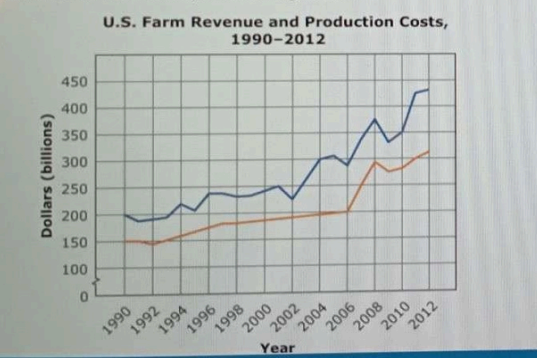
- A. They maintain stable prices for certain crops.
- B. They give farmers an incentive to promote crop diversity.
- C. They ensure the steady increase of crop production levels.
- D. They give farmers an incentive to grow crops that have higher subsidies.
Correct Answer & Rationale
Correct Answer: D
The varying insurance rates of the Revenue Protection Plan incentivize farmers to cultivate crops that receive higher subsidies, as these crops can mitigate financial risks associated with farming. This option aligns with economic behavior, where farmers are likely to prioritize profitability. Option A is incorrect because insurance rates do not directly stabilize prices; they primarily provide financial protection. Option B misrepresents the incentive structure; while crop diversity is beneficial, the plan does not specifically encourage it through varying rates. Option C is misleading, as the plan does not guarantee increased production levels; it merely provides a safety net against revenue loss.
The varying insurance rates of the Revenue Protection Plan incentivize farmers to cultivate crops that receive higher subsidies, as these crops can mitigate financial risks associated with farming. This option aligns with economic behavior, where farmers are likely to prioritize profitability. Option A is incorrect because insurance rates do not directly stabilize prices; they primarily provide financial protection. Option B misrepresents the incentive structure; while crop diversity is beneficial, the plan does not specifically encourage it through varying rates. Option C is misleading, as the plan does not guarantee increased production levels; it merely provides a safety net against revenue loss.
Which statement can be made based on both the passage and the table?
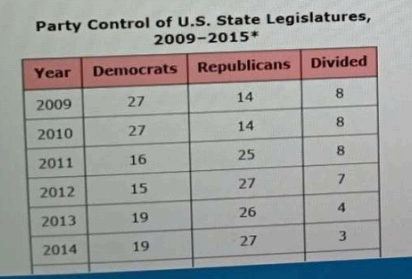
- A. The increase in independent voters has strengthened the influence of Democrats on the national level.
- B. The best political campaigns of Republicans and Democrats use modern media to communicate with voters.
- C. The most recent data shows that Republicans controlled almost three times the number of state legislatures as Democrats.
- D. The decrease in party identification has strengthened the influence of Republicans in state legislatures.
Correct Answer & Rationale
Correct Answer: B
Option B accurately reflects the information provided in both the passage and the table, highlighting the importance of modern media in effective political campaigns for both major parties. This statement emphasizes a shared strategy that transcends partisan lines, indicating a common approach to engaging voters. Option A incorrectly suggests a direct correlation between independent voters and the strengthening of Democrats, which is not supported by the data. Option C misrepresents the statistics regarding state legislature control, as the table likely shows a different ratio. Option D assumes that a decrease in party identification universally benefits Republicans, ignoring the complexities of voter behavior and preferences that the passage may address.
Option B accurately reflects the information provided in both the passage and the table, highlighting the importance of modern media in effective political campaigns for both major parties. This statement emphasizes a shared strategy that transcends partisan lines, indicating a common approach to engaging voters. Option A incorrectly suggests a direct correlation between independent voters and the strengthening of Democrats, which is not supported by the data. Option C misrepresents the statistics regarding state legislature control, as the table likely shows a different ratio. Option D assumes that a decrease in party identification universally benefits Republicans, ignoring the complexities of voter behavior and preferences that the passage may address.
Which event counters the viewpoint expressed in the newspaper excerpt that African Americans refused to defend their civil rights?
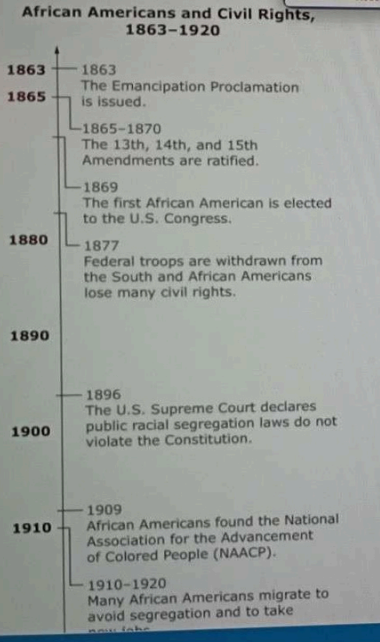
- A. the ratification of the 13th, 14th, and 15th Amendments
- B. the issuance of the Emancipation Proclamation
- C. the founding of the National Association for the Advancement of Colored People
- D. the start of the Great Migration
Correct Answer & Rationale
Correct Answer: C
The founding of the National Association for the Advancement of Colored People (NAACP) directly counters the viewpoint that African Americans refused to defend their civil rights. Established in 1909, the NAACP actively fought for civil rights through legal challenges, advocacy, and public education, demonstrating a strong commitment to defending their rights. Option A, the ratification of the 13th, 14th, and 15th Amendments, although significant, primarily established legal rights rather than showcasing active defense. Option B, the Emancipation Proclamation, ended slavery but did not directly address civil rights activism. Option D, the Great Migration, reflects a movement for better opportunities but does not specifically illustrate organized efforts to defend civil rights.
The founding of the National Association for the Advancement of Colored People (NAACP) directly counters the viewpoint that African Americans refused to defend their civil rights. Established in 1909, the NAACP actively fought for civil rights through legal challenges, advocacy, and public education, demonstrating a strong commitment to defending their rights. Option A, the ratification of the 13th, 14th, and 15th Amendments, although significant, primarily established legal rights rather than showcasing active defense. Option B, the Emancipation Proclamation, ended slavery but did not directly address civil rights activism. Option D, the Great Migration, reflects a movement for better opportunities but does not specifically illustrate organized efforts to defend civil rights.
Based on the excerpts, which speaker would agree with each statement below? Drag each statement into the box labeled with that speaker's name. If neither would agree with a statement, drag it to the box labeled "Neither."
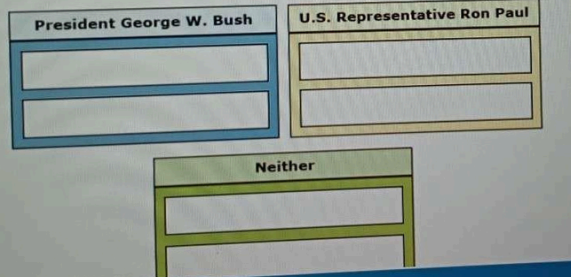
- A. Congress should spend money public education.
- B. Schools should meet federal education guidelines.
- C. Parents should hold public schools accountable.
- D. Local districts should set school guidelines.
Correct Answer & Rationale
Correct Answer:
Speaker A likely supports the idea that Congress should spend money on public education, as this aligns with a belief in federal investment in education for equitable access. Speaker B would agree that schools should meet federal education guidelines, as this emphasizes the importance of uniform standards for educational quality and accountability. Speaker C advocates for parental accountability in public schools, reflecting the belief that parents play a vital role in monitoring and improving educational outcomes. Speaker D likely supports the idea that local districts should set school guidelines, as this allows for tailored approaches that reflect community needs and values. If neither speaker aligns with a statement, it belongs in the "Neither" category.
Speaker A likely supports the idea that Congress should spend money on public education, as this aligns with a belief in federal investment in education for equitable access. Speaker B would agree that schools should meet federal education guidelines, as this emphasizes the importance of uniform standards for educational quality and accountability. Speaker C advocates for parental accountability in public schools, reflecting the belief that parents play a vital role in monitoring and improving educational outcomes. Speaker D likely supports the idea that local districts should set school guidelines, as this allows for tailored approaches that reflect community needs and values. If neither speaker aligns with a statement, it belongs in the "Neither" category.