This excerpt is from a 1987 speech by U.S. Supreme Court Justice Thurgood Marshall.
"I do not believe that the meaning of the Constitution was forever "fixed" at the Philadelphia Convention. Nor do I find the wisdom, foresight, and sense of justice exhibited by the Framers particularly profound. To the contrary, the government they devised was defective from the start, requiring several amendments, a civil war, and momentous social transformation to attain the system of constitutional government, and its respect for the individual freedoms and human rights, we hold as fundamental today. When contemporary Americans cite "The Constitution," they invoke concept that is vastly different from what the Framers barely began to construct two centurie ago... When the Founding Fathers used this phrase [We, the People) in 1787, they did not have in mind the majority of America's citizens. "We the People" included, in the words of the Framers, "the whole Number of free Persons."
This excerpt is from a 1987 speech by President Ronald Reagan.
“In a very real sense, it was then, in 1787, that the Revolution truly began. For it was with the writing of our Constitution, setting down the architecture of democratic government, that the noble sentiments and brave rhetoric of 1776 took on substance....
All men are created equal and endowed by their Creator with certain inalienable rights-until that moment some might have said that was just a high-blown sentiment, the dreams of a few philosophers and their hot-headed followers. But could one really construct a government, run a country, with such idealistic notions? But once those ideals took root in living, functioning institutions, once those notions became a nation-well, then, as I said, the revolution could really begin, not just in America but around the world, a revolution to free man from tyranny of every sort and secure his freedom the only way possible in this world, through the checks and balances and institutions of limited, democratic government.â€
Which statement from the excerpts provides evidence for the Inference that minority rights were not protected by the U.S. government as originally founded?
- A. "To the contrary, the government they devised was defective from the start, requiring several amendments, a civil war, and momentous social transformation to attain the system of constitutional government, and its respect for the individual freedoms and human rights, we hold as fundamental today."
- B. "In a very real sense, it was then, in 1787, that the Revolution truly began."
- C. "I do not believe that the meaning of the Constitution was forever 'fixed' at the Philadelphia Convention."
- D. "For it was with the writing of our Constitution, setting down the architecture of democratic government, that the noble sentiments and brave rhetoric of 1776 took on substance......"
Correct Answer & Rationale
Correct Answer: A
Option A highlights the inherent flaws in the original government structure, indicating that it required significant amendments and a civil war to address fundamental issues, including the protection of minority rights. This suggests that, from its inception, the government did not adequately safeguard these rights. Options B, C, and D, while relevant to the historical context, do not specifically address the inadequacies of minority rights protection. B focuses on the ongoing nature of the Revolution, C discusses the evolving interpretation of the Constitution, and D emphasizes the establishment of democratic principles without mentioning the lack of protections for minority rights.
Option A highlights the inherent flaws in the original government structure, indicating that it required significant amendments and a civil war to address fundamental issues, including the protection of minority rights. This suggests that, from its inception, the government did not adequately safeguard these rights. Options B, C, and D, while relevant to the historical context, do not specifically address the inadequacies of minority rights protection. B focuses on the ongoing nature of the Revolution, C discusses the evolving interpretation of the Constitution, and D emphasizes the establishment of democratic principles without mentioning the lack of protections for minority rights.
Other Related Questions
Which statement from Common Sense provides evidence that the author Thomas Paine supported American independence?
- A. "Absolute governments have this advantage with them, that they are simple..."
- B. "I challenge the warmest advocate for reconciliation, to [show], a single advantage that this continent can reap, by being connected with Great Britain."
- C. "The prejudice of Englishmen, in [favor] of their own government arises as much or more from national pride than reason."
- D. "Society in every state is a blessing, but government even in its best state is but a necessary evil."
Correct Answer & Rationale
Correct Answer: B
Option B provides clear evidence of Thomas Paine's support for American independence by challenging the benefits of remaining connected to Great Britain. By asking advocates for reconciliation to demonstrate any advantages, Paine emphasizes the futility of such ties and advocates for autonomy. Option A discusses the simplicity of absolute governments, which does not directly address the question of American independence. Option C critiques English national pride but lacks a direct link to the argument for independence. Option D presents a philosophical view on government but does not specifically advocate for breaking away from British rule.
Option B provides clear evidence of Thomas Paine's support for American independence by challenging the benefits of remaining connected to Great Britain. By asking advocates for reconciliation to demonstrate any advantages, Paine emphasizes the futility of such ties and advocates for autonomy. Option A discusses the simplicity of absolute governments, which does not directly address the question of American independence. Option C critiques English national pride but lacks a direct link to the argument for independence. Option D presents a philosophical view on government but does not specifically advocate for breaking away from British rule.
Which statement is supported by the diagrams?
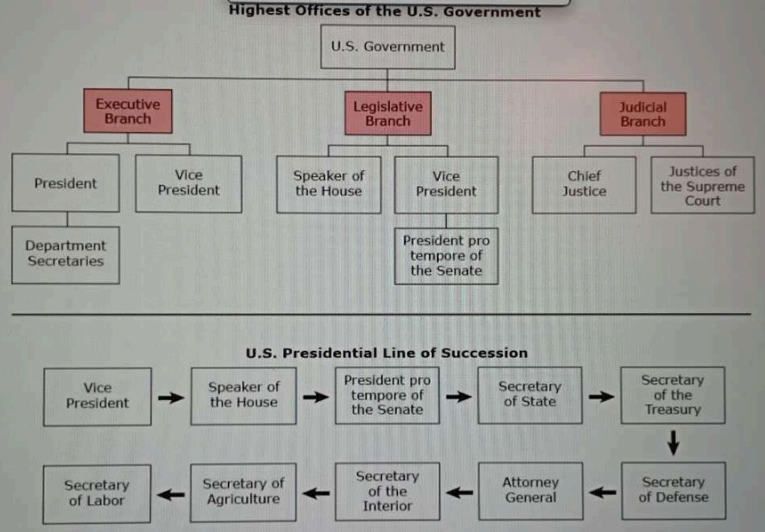
- A. Only the vice president and the president pro tempore of the Senate serve in two branches.
- B. Only officials from the executive and legislative branches are in the line of presidential succession.
- C. The order of presidential succession is determined by the members of the executive branch.
- D. The leaders of Congress are accountable to the members of the executive branch.
Correct Answer & Rationale
Correct Answer: B
Option B accurately reflects the structure of presidential succession, which includes officials from both the executive and legislative branches, specifically the vice president and the leaders of Congress. Option A is misleading; while the vice president and president pro tempore serve in both branches, other officials in the line of succession also include members from the cabinet, which is part of the executive branch. Option C is incorrect as the order of succession is established by law, not determined solely by the executive branch members. Option D misrepresents accountability; Congress leaders are accountable to their constituents, not the executive branch.
Option B accurately reflects the structure of presidential succession, which includes officials from both the executive and legislative branches, specifically the vice president and the leaders of Congress. Option A is misleading; while the vice president and president pro tempore serve in both branches, other officials in the line of succession also include members from the cabinet, which is part of the executive branch. Option C is incorrect as the order of succession is established by law, not determined solely by the executive branch members. Option D misrepresents accountability; Congress leaders are accountable to their constituents, not the executive branch.
What impact do the varying insurance rates of the Revenue Protection Plan have on farming?
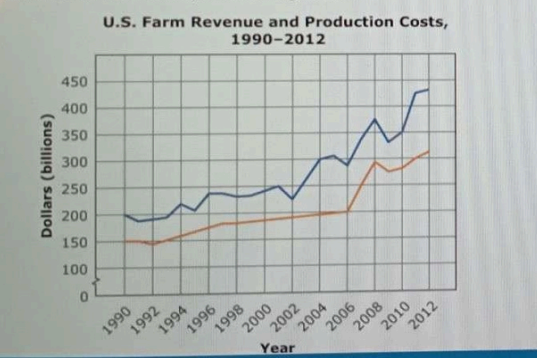
- A. They maintain stable prices for certain crops.
- B. They give farmers an incentive to promote crop diversity.
- C. They ensure the steady increase of crop production levels.
- D. They give farmers an incentive to grow crops that have higher subsidies.
Correct Answer & Rationale
Correct Answer: D
The varying insurance rates of the Revenue Protection Plan incentivize farmers to cultivate crops that receive higher subsidies, as these crops can mitigate financial risks associated with farming. This option aligns with economic behavior, where farmers are likely to prioritize profitability. Option A is incorrect because insurance rates do not directly stabilize prices; they primarily provide financial protection. Option B misrepresents the incentive structure; while crop diversity is beneficial, the plan does not specifically encourage it through varying rates. Option C is misleading, as the plan does not guarantee increased production levels; it merely provides a safety net against revenue loss.
The varying insurance rates of the Revenue Protection Plan incentivize farmers to cultivate crops that receive higher subsidies, as these crops can mitigate financial risks associated with farming. This option aligns with economic behavior, where farmers are likely to prioritize profitability. Option A is incorrect because insurance rates do not directly stabilize prices; they primarily provide financial protection. Option B misrepresents the incentive structure; while crop diversity is beneficial, the plan does not specifically encourage it through varying rates. Option C is misleading, as the plan does not guarantee increased production levels; it merely provides a safety net against revenue loss.
Which statement is correct about the change in racial and ethnic populations between 2000 and 2010?
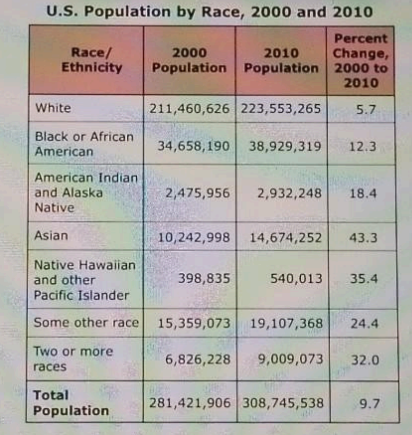
- A. The Black or African American population had the greatest percentage of growth.
- B. The Native Hawaiian and other Pacific Islander population grew by a greater proportion than the Asian population.
- C. The White population experienced the slowest growth of all groups.
- D. The American Indian and Alaska Native population experienced almost no change.
Correct Answer & Rationale
Correct Answer: B
Option B accurately reflects demographic trends, as the Native Hawaiian and other Pacific Islander population indeed saw a higher percentage increase compared to the Asian population during this period. Option A is incorrect; while the Black or African American population grew, it was not the greatest percentage increase among all racial groups. Option C misrepresents the data; although the White population's growth was slower compared to previous decades, it was not the slowest overall. Option D is misleading as well; the American Indian and Alaska Native population did experience some growth, albeit modest, rather than remaining unchanged.
Option B accurately reflects demographic trends, as the Native Hawaiian and other Pacific Islander population indeed saw a higher percentage increase compared to the Asian population during this period. Option A is incorrect; while the Black or African American population grew, it was not the greatest percentage increase among all racial groups. Option C misrepresents the data; although the White population's growth was slower compared to previous decades, it was not the slowest overall. Option D is misleading as well; the American Indian and Alaska Native population did experience some growth, albeit modest, rather than remaining unchanged.